Zhishang Steel Co., Ltd
Integrity · Pragmatic · Perfect · Fast · Assured - international brand
Phone: +86-531-88752665
Welcome to Zhishang Steel Co., Ltd.
TEL: (Gavin) +86-15665898999 | Email : info@zhishangsteel.com

Zhishang Steel Co., Ltd
Integrity · Pragmatic · Perfect · Fast · Assured - international brand
Phone: +86-531-88752665

Email:info@zhishangsteel.com
Tel:+86-13964085002
Whatsapp:+86-13964085002
Phone:+86-531-88752665
Message
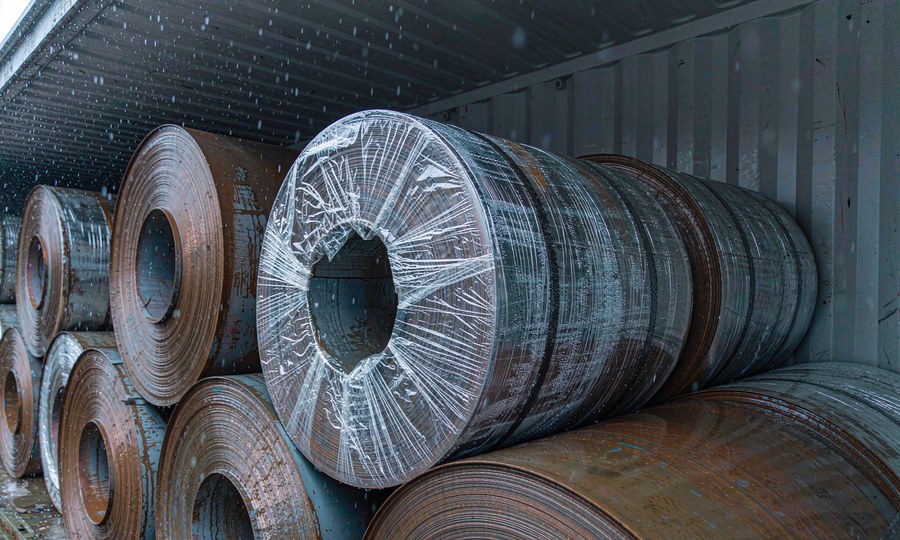
Every exporter of steel has had the phone call. The container arrives, the doors open, and the coils or pipes inside are beaded with water. Somebody immediately says the container leaked. Usually it didn't. What happened is something the industry calls container rain, and once you understand it, most of the fixes are cheap and most of the damage is avoidable.
Container rain is condensation that forms inside a sealed box. Steel is dense and holds its temperature for a long time. The air inside the container is not. When a container sits in the sun at a port, or moves from a cool inland morning to a humid tropical afternoon, the air inside warms and cools faster than the cargo does. Warm air holds more moisture; cool air holds less. When the air in the box cools against the steel - the walls at night, or the cargo itself - the moisture it was carrying drops out as water on the coldest surface available. That surface is your steel.
The cycle can repeat for days. Warm during the day, cool at night, moisture moving from the air to the metal and part of the way back. A container crossing from a northern Chinese winter into a Southeast Asian monsoon season passes through several of these swings before anyone opens the doors.
A sealed container holds whatever water was in it when the doors shut. That includes the air, which carries humidity, and everything loaded inside the box. Timber dunnage and pallets that were rained on the day before. Packaging that got wet. Even the plywood floor, which absorbs moisture and gives it back slowly. Load a container in the rain - people do, when the schedule is tight - and you can seal in litres of water before the doors close.
There's also the cargo itself. A galvanized steel coil that was stored outside at 5°C and loaded into a warm, humid container will stay cold for hours, and cold steel sitting in humid air is exactly the combination that collects water.
Most of what container rain does is cosmetic, at least at first. Light surface rust on bare edges, water marks on zinc, dull patches on a coating where the wrap sat wet for a week. None of it usually affects the coating weight or the mechanical properties. But first impressions matter, and nobody enjoys opening a container to find rust stains on a product they're about to sell to a picky end customer.
It gets more serious when water sits. Trapped moisture between tightly wound coil wraps can cause white rust on zinc, or pitting if it stays for weeks. Corrugated roofing sheet stacked wet in a bundle can stain in lines that never come off. Pipe ends and threads are vulnerable because that's where the coating is thinnest. And if the buyer's QC inspector opens the container before you do, a cosmetic problem turns into a claim.
None of this is mysterious, and none of it needs elaborate equipment. It needs a few habits applied consistently, shipment after shipment:
Start dry. Inspect the container before loading - check the floor, the door seals and the roof for holes. Never stuff in the rain if it can be avoided, even if it costs half a day. Dry dunnage only. This single step prevents more moisture problems than anything else on the list.
Use desiccant in the right amount. Container desiccant bags - the calcium chloride type that hangs on the wall - work well, but only if you use enough of them and hang them properly. A few bags tossed on top of the cargo barely help. The dosage depends on the voyage length, the season and the cargo volume, and a freight forwarder or the bag supplier can work it out for you.
Wrap properly. VCI paper or film against the steel itself, then the outer wrap. For coils, the standard eye-wrap plus an outer layer does most of the work; the point is to keep moisture away from the metal surface, not to make the coil waterproof forever.
Think about ventilation carefully. There are vented containers, and some buyers ask for them. Ventilation helps when the cargo is warm and the outside air is dry. On a monsoon route with saturated air, a vent can bring more moisture in than it lets out. It's a route-and-season decision, not a default.
Watch the temperature gap. Steel that was sitting outside in the cold should be allowed to come close to the container's temperature, or at least be wrapped before it goes in. A prepainted galvanized steel coil straight from a cold yard into warm humid air will fog over within hours.
If moisture matters to you, say so in the order, not after the fact. Ask for container desiccants as a line item. Ask how the goods will be wrapped, and whether VCI is included for bare or galvanized steel pipe. Ask what the yard does when it rains on loading day. Suppliers who have thought about this will answer quickly and specifically. The ones who haven't will say "don't worry", which is not an answer.
Container rain isn't a defect in the steel, and in most cases it isn't a defect in the container either. It's physics, and physics can be managed with dry loading, enough desiccant and sensible wrapping. Do those things and the doors open on steel that looks the way it did when it left the line.
Zhishang Steel has always been a pioneer in custom steel and special supplies, and has been recognized for its efforts in enhancing work efficiency and product quality. In addition to ISO9001:2015 certification, we also adhere to strict quality policies and proprietary procedures. If you have any questions, please contact us to provide the best type of product solution for your pre-painted, coil coating metal process, we will closely support after-sales service to ensure that your subsequent problems can be solved in a timely manner, if you have any questions, please send email to info@zhishangsteel.com, we look forward to serving you.

Zhishang Steel, specializing in domestic steel products trade, warehousing, processing and other services. The team has four service teams: Shandong Zhishang Steel Co., LTD., Shandong Zhiyiheng Trading Co., LTD., Tai 'an Zhishang Economic and Trade Co., LTD., Shandong Zhishang Steel Structure Co., LTD. Mainly engaged in steel coil, coated, stee···
▶ Container Rain: Why Steel Arrives Wet and What Actually Prevents It
▶ Your 1.0mm Sheet Measured 0.95mm: Thickness Tolerance Without the Panic
▶ Steel Near the Sea: How to Spec Sheet and Coil for Salt Air
▶ Zinc-Aluminium-Magnesium Coated Steel: Where It Wins, Where It Doesn't
▶ Roof Sheet Geometry: Purlin Spacing, Lap Lengths and the Pitch That Decides the Rest
▶ Why Two Batches of the Same RAL Colour Don't Match: Delta E and Colour Tolerance
▶ As-Rolled, Normalized, TMCP or Quenched: What Delivery Condition Changes About Your Steel
▶ Salt Spray Hours: What 500 Hours on a Test Panel Really Says About Coated Steel
▶ Hardness Isn't Strength: How to Read the Mechanical Property Line on a Mill Certificate
▶ Coating Adhesion and the T-Bend: Why Paint Sticks to Some Coils and Not Others
Email:info@zhishangsteel.com
Tel:+86-13964085002
Whatsapp:+86-13964085002
Phone:+86-531-88752665
Message 



Copyright © 2022 Zhishang Steel Co., Ltd All Rights Reserved. XML Map
