Zhishang Steel Co., Ltd
Integrity · Pragmatic · Perfect · Fast · Assured - international brand
Phone: +86-531-88752665
Welcome to Zhishang Steel Co., Ltd.
TEL: (Gavin) +86-15665898999 | Email : info@zhishangsteel.com

Zhishang Steel Co., Ltd
Integrity · Pragmatic · Perfect · Fast · Assured - international brand
Phone: +86-531-88752665


Email:info@zhishangsteel.com
Tel:+86-13964085002
Whatsapp:+86-13964085002
Phone:+86-531-88752665
Message
A customer sends two photographs side by side. On the left, panels from a shipment that arrived last month. On the right, panels installed on the same façade two years earlier. Same RAL number on both purchase orders. And yes, if you look carefully, they are not quite the same colour. The question that follows is always the same one: who got it wrong?
Usually, nobody. What that customer ran into is the normal behaviour of painted steel, and it has two technical names worth knowing before your next coil order: colour difference and metamerism.
Coil coating is an industrial process, not a laboratory one. The paint arrives from the paint maker in batches, and within that maker's own tolerance the pigment lots vary a little. The line itself adds its share: oven temperature and line speed affect how the film cures, and a slightly different cure can pull the hue a shade warmer or cooler. The substrate plays a part too, since the same paint over a bright galvanized steel coil reads differently than over a duller surface, and gloss level changes what the eye reports more than most people expect.
None of this is a defect in the sense of a failed panel. It is variation within the tolerance the industry quietly accepts, and it only becomes a problem when two visibly different batches end up on the same roof, wall or door.
Colour difference is measured, not judged. The standard approach puts both panels in a colorimeter, converts the readings to the CIELAB scale, and reports the gap as a single number, ΔE. One ΔE is roughly the smallest difference a trained eye can spot when panels sit edge to edge. Between one and two, most people can see it if they look. Above three, there's no arguing.
For architectural cladding, spec sheets commonly agree on a tolerance of ΔE 1.5 to 2.0 between the reference panel and the delivered coil. Two points matter when you use that number in a contract. First, say who measures and with what instrument geometry, typically 45/0. Second, say under which light, because a pair of panels that match under daylight can split apart under shop lighting. Measurement conditions are part of the specification, not fine print.
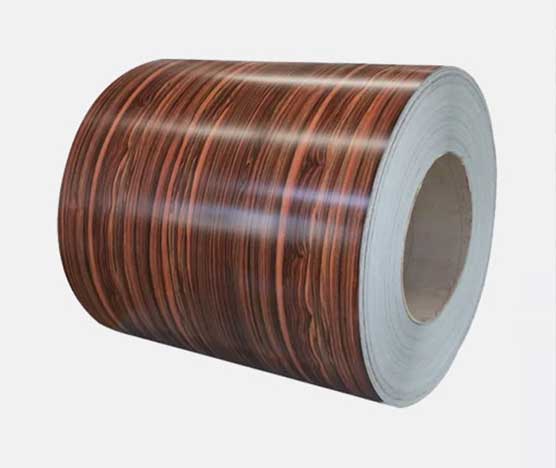
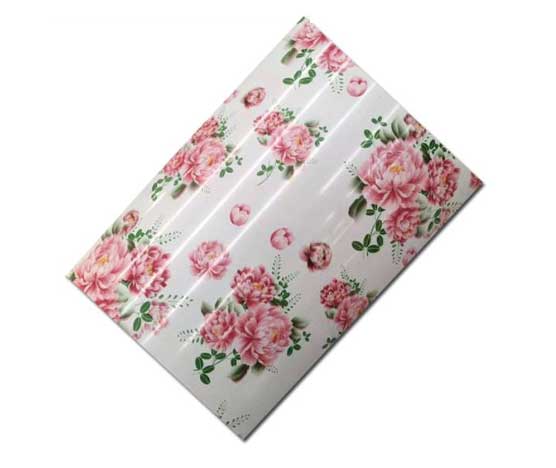
Also worth knowing: texture changes the game. A smooth panel and a grained panel made with identical paint will still measure differently, so comparisons belong between like surfaces. We learned this the hard way with printed pattern galvanized steel coil, where the pattern itself breaks up the colour and makes visual judgement nearly useless. The instrument doesn't get distracted. People do.
Metamerism is the sneakier of the two problems. Two panels can match perfectly under one light source and separate under another, because the two paint films were built from different pigment sets. The colorimeter says ΔE 0.5 under D65 daylight, then the same pair reads ΔE 2.5 under a warm workshop lamp, and the site foreman concludes somebody swapped the material.
Nobody swapped anything. The pigments reflect light differently across the spectrum, and each light source weights the spectrum differently. Paint makers control this by keeping pigment sets consistent, which is one more reason batch continuity matters. If colour is critical on your project, ask whether the touch-up coil will come from the same paint batch, not just the same colour code. For a brick grain PPGI sheet or any printed finish, the question matters twice, since the base coat and the printed pattern each carry their own batch variation.
Practical advice, in the order we'd give it. Agree the colour code and the tolerance together, ΔE value, instrument geometry, illuminant, and gloss. Ask for a reference panel before production and keep it, because "the colour we agreed" is a piece of painted steel, not a memory. For anything visible as a single surface, a façade, a long roof plane, a run of shutters, order the whole quantity in one batch, or reserve paint for a later top-up order. And if the project will grow in phases, say so at the first order; we can plan the second delivery around the same paint supply instead of discovering the mismatch after installation.
One habit costs nothing and saves the most: photograph nothing, compare everything. Photos taken on phones under mixed light have ended more supplier conversations than any real colour difference ever did. Put the two panels edge to edge, under the agreed light, and most "mismatches" quietly disappear.
Colour on steel is a moving target only when nobody pins it down. Pin it down in the contract, verify it with a number instead of an opinion, and the same RAL number will mean the same thing on every shipment you receive. When in doubt, ask for the batch reference with your next PPGI colour coated coil order; a supplier who can answer that question in one email is a supplier who has their paint store under control.
Zhishang Steel has always been a pioneer in custom steel and special supplies, and has been recognized for its efforts in enhancing work efficiency and product quality. In addition to ISO9001:2015 certification, we also adhere to strict quality policies and proprietary procedures. If you have any questions, please contact us to provide the best type of product solution for your pre-painted, coil coating metal process, we will closely support after-sales service to ensure that your subsequent problems can be solved in a timely manner, if you have any questions, please send email to info@zhishangsteel.com, we look forward to serving you.

Zhishang Steel, specializing in domestic steel products trade, warehousing, processing and other services. The team has four service teams: Shandong Zhishang Steel Co., LTD., Shandong Zhiyiheng Trading Co., LTD., Tai 'an Zhishang Economic and Trade Co., LTD., Shandong Zhishang Steel Structure Co., LTD. Mainly engaged in steel coil, coated, stee···
▶ Why Two Batches of the Same RAL Colour Don't Match: Delta E and Colour Tolerance
▶ As-Rolled, Normalized, TMCP or Quenched: What Delivery Condition Changes About Your Steel
▶ Salt Spray Hours: What 500 Hours on a Test Panel Really Says About Coated Steel
▶ Hardness Isn't Strength: How to Read the Mechanical Property Line on a Mill Certificate
▶ Coating Adhesion and the T-Bend: Why Paint Sticks to Some Coils and Not Others
▶ Heat Numbers: How One Stamped Code Follows Your Steel From Furnace to Door
▶ Flatness, Camber and Edge Wave: Reading the Shape of a Coil Before It Costs You
▶ Q235, A36, S235JR, SS400: Four Names for (Almost) the Same Steel
▶ Zinc Coating Weight, Explained: What Z100, Z275 and AZ150 Actually Mean
▶ Weathering Steel: Why the Rust on Purpose Actually Protects
Email:info@zhishangsteel.com
Tel:+86-13964085002
Whatsapp:+86-13964085002
Phone:+86-531-88752665
Message 



Copyright © 2022 Zhishang Steel Co., Ltd All Rights Reserved. XML Map