Zhishang Steel Co., Ltd
Integrity · Pragmatic · Perfect · Fast · Assured - international brand
Phone: +86-531-88752665
Welcome to Zhishang Steel Co., Ltd.
TEL: (Gavin) +86-15665898999 | Email : info@zhishangsteel.com

Zhishang Steel Co., Ltd
Integrity · Pragmatic · Perfect · Fast · Assured - international brand
Phone: +86-531-88752665

Email:info@zhishangsteel.com
Tel:+86-13964085002
Whatsapp:+86-13964085002
Phone:+86-531-88752665
Message
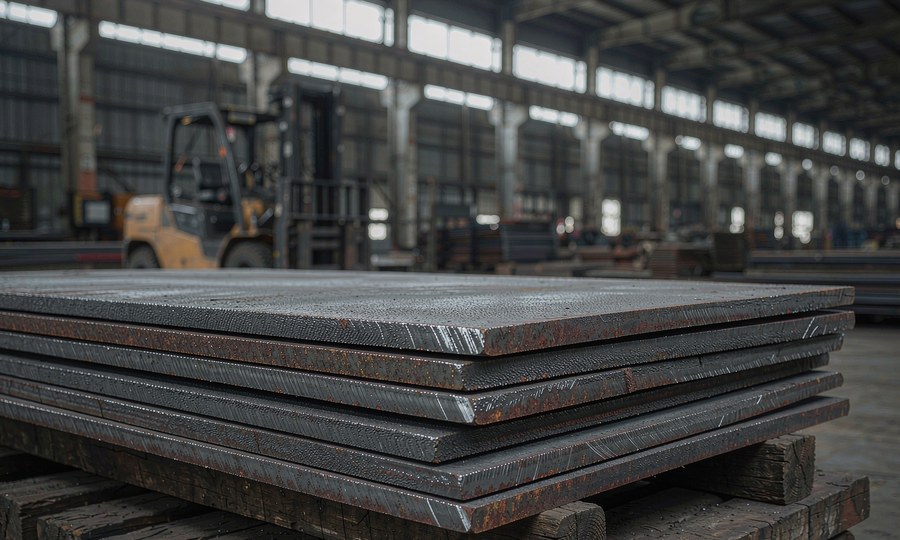
Most enquiries that land on our desk list three things: grade, thickness and tonnage. Delivery condition is usually missing, and it happens to be the line that decides whether the steel behaves the way the drawing expects. Two plates can carry the same Q355 or A36 stamp and still differ in yield strength, low-temperature toughness and how they respond to a weld, purely because one left the mill as-rolled and the other went through a normalizing furnace.
Here is what the four routes you are most likely to see on a quotation actually mean, and where each one earns its money.
As-rolled, often written AR or hot-rolled, means the plate or coil is rolled above the recrystallisation temperature and then cools in air. Nothing else happens to it. This is the cheapest route and the one with the widest availability, which is why the bulk of structural steel moves this way.
Properties come from chemistry and rolling reduction rather than heat treatment, so consistency from heat to heat depends on the mill holding its practice steady. For workshop tables, racking, pallets, guardrails and general fabrication, where nothing is loaded hard and the weld is a simple fillet, as-rolled is normally enough. Specify it and you keep the price where it should be.
One variation worth knowing: normalizing rolling, or NR, rolls the plate inside a temperature window that refines the grain without sending it to a separate furnace. It sits between AR and true normalizing in both properties and price. If a quotation says NR and you were expecting normalized, those are not the same thing.
Normalizing reheats the plate above the transformation temperature and then cools it in still air. The grain structure comes out fine and uniform, toughness improves, and the scatter of properties across the plate tightens. This is the standard route for boiler and pressure vessel work, where a specified impact energy at a defined test temperature has to be proven on test pieces.
The trade-offs are real. An extra furnace cycle, a longer lead time, and usually a minimum quantity per heat, because a mill does not want to fire a furnace for eight tonnes. On a boiler and pressure vessel steel plate spec such as SA516 Gr.70 or P355GH, the +N condition sits in the material standard, so you are not really choosing it. On ordinary structural plate, asking for normalized “just to be safe” buys cost you may never recover.
Thermo-mechanical controlled processing rolls the steel inside a tight temperature band and finishes with accelerated cooling. Strength and toughness come from the rolling schedule rather than from alloying, so chemistry stays lean and the carbon equivalent drops. That shows up on the shop floor as easier welding with less preheat.
Bridge girders, shipbuilding steel sheet, offshore structures and heavily loaded columns lean on this route for that reason. Two catches are worth flagging before you commit. Only a limited number of mills run a proper TMCP line, so grade, thickness and width combinations are narrower than for as-rolled, and the lead time is longer. The second one is less obvious: because the properties come out of the rolling schedule, running the plate through a heat treatment furnace afterwards undoes them. If the fabricator plans to stress-relieve after welding, that conversation belongs in the enquiry, not in week six.
Q+T heats the plate, quenches it hard, then tempers back to a target. Yield strengths land well above anything a plain carbon grade reaches, and abrasion-resistant plate lives in this family. Hardness is high, and so is the sensitivity of the heat-affected zone. Welding generally needs a qualified procedure, controlled heat input and often preheat. Cutting and forming want the right consumables and a little patience.
You see it on excavator buckets, chute liners, dump truck bodies, crusher parts and mould bases, in other words wherever abrasion or load density drives the decision. It is also the route where buyers most often get caught by a cheap offer: a plate sold as wear-resistant without a stated delivery condition and a matching test report is worth questioning.
Delivery condition is not a formality that sits in a certificate. It changes six things you will feel:
• Yield and tensile values for the same nominal grade
• Impact energy, and the lowest temperature where it is still guaranteed
• Carbon equivalent, and therefore your welding procedure and preheat
• Minimum bending radius and how the material behaves under a press brake
• Unit price, which can move by a double-digit percentage between AR and N
• Lead time and minimum order quantity, because furnace and TMCP capacity is scheduled, not stocked
If you are working with a Q355 hot rolled steel coil that will be slit, formed and welded into a racking upright, none of the exotic routes will help you. If the same tonnage is headed for a pressure vessel, the cheapest offer on the table is probably the wrong one.
On a mill test certificate the delivery condition appears as a column of its own, next to grade and heat number: +AR or as-rolled, +N for normalized, +M for thermo-mechanically rolled and +QT for quenched and tempered under the EN systems, or a written heat treatment statement on an ASTM certificate. The impact test line underneath is what connects it to real performance, because it carries both the energy value and the test temperature.
If the certificate you receive does not state delivery condition, and the part is loaded or welded, ask for a corrected one before the plate goes to the machine. It is a five-minute email, and it is the difference between a defensible job and an argument.
Tell us what the part does rather than what grade the last supplier sent. Static load or cyclic, operating temperature, whether it gets welded, whether it gets bent. If sub-zero impact is required, name the temperature, because that single number often rules two of the four routes out straight away.
Then leave the route open unless the standard forces your hand. A normalized A36 mild steel plate costs more than an as-rolled one and performs the same in a shed floor. A wear plate asked for in as-rolled condition will not last a season in a chute. Getting the pair right is most of the job.
We quote both options when the application is borderline, with the price gap on the table, so the decision stays with the person who knows the machine. Send the drawing, or just describe what the steel has to survive, and we will say which route actually fits.
Zhishang Steel has always been a pioneer in custom steel and special supplies, and has been recognized for its efforts in enhancing work efficiency and product quality. In addition to ISO9001:2015 certification, we also adhere to strict quality policies and proprietary procedures. If you have any questions, please contact us to provide the best type of product solution for your pre-painted, coil coating metal process, we will closely support after-sales service to ensure that your subsequent problems can be solved in a timely manner, if you have any questions, please send email to info@zhishangsteel.com, we look forward to serving you.

Zhishang Steel, specializing in domestic steel products trade, warehousing, processing and other services. The team has four service teams: Shandong Zhishang Steel Co., LTD., Shandong Zhiyiheng Trading Co., LTD., Tai 'an Zhishang Economic and Trade Co., LTD., Shandong Zhishang Steel Structure Co., LTD. Mainly engaged in steel coil, coated, stee···
▶ As-Rolled, Normalized, TMCP or Quenched: What Delivery Condition Changes About Your Steel
▶ Salt Spray Hours: What 500 Hours on a Test Panel Really Says About Coated Steel
▶ Hardness Isn't Strength: How to Read the Mechanical Property Line on a Mill Certificate
▶ Coating Adhesion and the T-Bend: Why Paint Sticks to Some Coils and Not Others
▶ Heat Numbers: How One Stamped Code Follows Your Steel From Furnace to Door
▶ Flatness, Camber and Edge Wave: Reading the Shape of a Coil Before It Costs You
▶ Q235, A36, S235JR, SS400: Four Names for (Almost) the Same Steel
▶ Zinc Coating Weight, Explained: What Z100, Z275 and AZ150 Actually Mean
▶ Weathering Steel: Why the Rust on Purpose Actually Protects
▶ Spangle, Skin-Pass and Passivation: Reading the Surface of a Galvanized Steel Coil
Email:info@zhishangsteel.com
Tel:+86-13964085002
Whatsapp:+86-13964085002
Phone:+86-531-88752665
Message 



Copyright © 2022 Zhishang Steel Co., Ltd All Rights Reserved. XML Map
