Zhishang Steel Co., Ltd
Integrity · Pragmatic · Perfect · Fast · Assured - international brand
Phone: +86-531-88752665
Welcome to Zhishang Steel Co., Ltd.
TEL: (Gavin) +86-15665898999 | Email : info@zhishangsteel.com

Zhishang Steel Co., Ltd
Integrity · Pragmatic · Perfect · Fast · Assured - international brand
Phone: +86-531-88752665

Email:info@zhishangsteel.com
Tel:+86-13964085002
Whatsapp:+86-13964085002
Phone:+86-531-88752665
Message
Two numbers sit near the top of every mill certificate: yield strength and tensile strength. Nearby, sometimes, sits a third: hardness. Buyers quote all three back at each other, mix them up constantly, and occasionally reject good steel for the wrong reason. They measure different things, and knowing which one matters for your application saves arguments later.
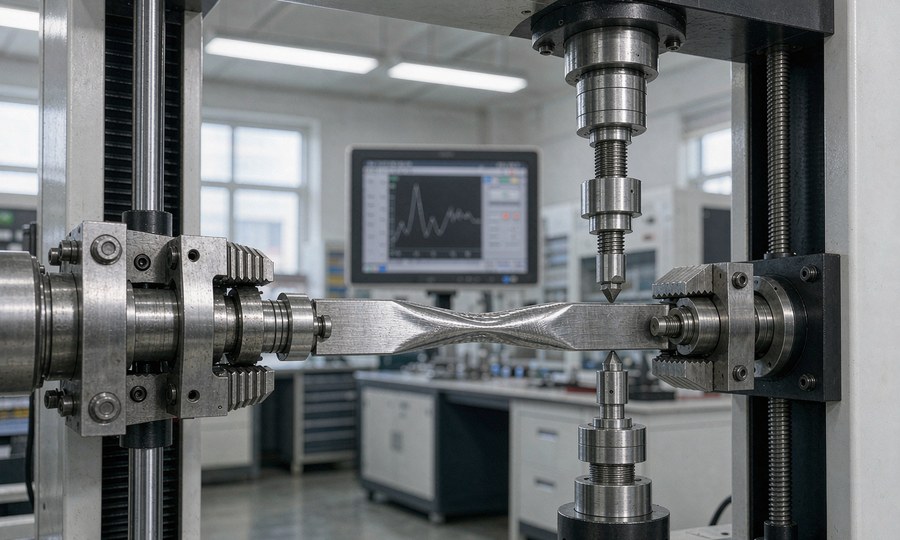
A tensile test is destructive. A coupon is cut from the coil or plate, machined to a standard shape, and pulled in a machine until it breaks. The machine records how much force it takes to make the steel start to deform permanently — that is the yield strength — and the peak force before fracture, which is the ultimate tensile strength. It also records how much the coupon stretches before it snaps, which is elongation, and that number quietly matters more than people give it credit for.
Yield is the number structural engineers care about. A beam or a column spends its working life being asked to stay elastic, and yield strength is the line it must not cross. Tensile strength matters as a margin: it tells you how much reserve the steel has above yield before it actually tears apart. Elongation tells you whether the steel will warn you first. A ductile grade that stretches 20% or more before failure bends, dents, and deforms visibly under overload. A brittle failure gives no such warning. When we get asked about a carbon steel coil destined for roll-forming or deep drawing, elongation is often the property that decides whether the parts come off the line clean or come off cracked.
Hardness is not measured by pulling steel apart. It is measured by pressing something very hard into the surface and seeing how big a dent it leaves. Brinell presses in a ball and divides force by the curved area of the impression. Rockwell measures depth instead of area, which is why it is fast and needs no microscope. Vickers uses a diamond pyramid and covers nearly everything from soft aluminium to hardened tool steel on one scale. None of these tests destroys the part, or at least not meaningfully, and all of them take seconds. That is the practical difference in a sentence: tensile needs a coupon and a lab, hardness needs a handheld gauge and ten seconds on the finished goods.
For steel, hardness and tensile strength track each other reasonably well, which is why people get them confused. A common working rule puts tensile strength near 3.4 times the Brinell number for plain carbon steels — a 150 HB steel is somewhere around 500 MPa tensile — but the word "near" is doing real work in that sentence. The correlation is an approximation fitted to data, not physics. It drifts for highly worked material, and it says nothing at all about elongation or yield behaviour. You cannot fully replace a tensile test with a hardness test; you can use hardness to sort, screen, and spot-check a heat that already has valid tensile data on its certificate.
The classic example is austenitic stainless steel. Grade 304 in the annealed condition is soft, around 70-80 HRB, and forms beautifully. Grade 301 starts in the same neighbourhood but work-hardens much faster: bend it, roll it, stretch it, and its strength climbs steeply, which is why it ends up in springs and fasteners. If you measured a formed 301 part by hardness, you would report a much higher number than the certificate shows, and both facts would be true. Anyone who has sourced stainless steel coil for formed parts knows this tension — the certificate describes the steel as delivered, and the steel you actually ship to the press may be a different animal after processing.
Galvanizing and skin-passing raise similar questions. A light temper pass on a galvanized steel sheet changes surface hardness and removes the yield-point elongation that causes stretcher strain marks, without moving the base steel's tensile data much. That is exactly the kind of situation where a buyer measures hardness on incoming material, gets a number inconsistent with the certificate, and assumes something dishonest happened. Usually nothing did. The processes between the mill and the measurement simply changed the surface.
So which number should you watch? A quick sort: if you are building structure or the load path matters, yield strength and elongation are the headline numbers and the tensile test is non-negotiable. If you are checking that incoming material matches the heat it claims to be, hardness is a cheap, fast screen on finished goods where cutting a coupon is impractical. If you are forming, drawing, or bending, elongation deserves more of your attention than either. And if a hardness reading on site disagrees with the certificate, check the test method first — comparing an HRC number to an HRB requirement, or measuring on a curved or decarburised surface, produces more false alarms than genuine material problems ever do.
The certificate is a description of one sample from one heat. Hardness checks are a description of the piece in front of you. Used together, each covers the other's blind spot; used interchangeably, they generate confusion that neither the mill nor the buyer benefits from.
Zhishang Steel has always been a pioneer in custom steel and special supplies, and has been recognized for its efforts in enhancing work efficiency and product quality. In addition to ISO9001:2015 certification, we also adhere to strict quality policies and proprietary procedures. If you have any questions, please contact us to provide the best type of product solution for your pre-painted, coil coating metal process, we will closely support after-sales service to ensure that your subsequent problems can be solved in a timely manner, if you have any questions, please send email to info@zhishangsteel.com, we look forward to serving you.

Zhishang Steel, specializing in domestic steel products trade, warehousing, processing and other services. The team has four service teams: Shandong Zhishang Steel Co., LTD., Shandong Zhiyiheng Trading Co., LTD., Tai 'an Zhishang Economic and Trade Co., LTD., Shandong Zhishang Steel Structure Co., LTD. Mainly engaged in steel coil, coated, stee···
▶ Hardness Isn't Strength: How to Read the Mechanical Property Line on a Mill Certificate
▶ Coating Adhesion and the T-Bend: Why Paint Sticks to Some Coils and Not Others
▶ Heat Numbers: How One Stamped Code Follows Your Steel From Furnace to Door
▶ Flatness, Camber and Edge Wave: Reading the Shape of a Coil Before It Costs You
▶ Q235, A36, S235JR, SS400: Four Names for (Almost) the Same Steel
▶ Zinc Coating Weight, Explained: What Z100, Z275 and AZ150 Actually Mean
▶ Weathering Steel: Why the Rust on Purpose Actually Protects
▶ Spangle, Skin-Pass and Passivation: Reading the Surface of a Galvanized Steel Coil
▶ Printed and Patterned Color Coated Coil: How Wood Grain and Brick Patterns Get Onto Steel
▶ Hot Rolled or Cold Rolled: Choosing the Right Route for Carbon Steel Coil
Email:info@zhishangsteel.com
Tel:+86-13964085002
Whatsapp:+86-13964085002
Phone:+86-531-88752665
Message 



Copyright © 2022 Zhishang Steel Co., Ltd All Rights Reserved. XML Map
