Zhishang Steel Co., Ltd
Integrity · Pragmatic · Perfect · Fast · Assured - international brand
Phone: +86-531-88752665
Welcome to Zhishang Steel Co., Ltd.
TEL: (Gavin) +86-15665898999 | Email : info@zhishangsteel.com

Zhishang Steel Co., Ltd
Integrity · Pragmatic · Perfect · Fast · Assured - international brand
Phone: +86-531-88752665

Email:info@zhishangsteel.com
Tel:+86-13964085002
Whatsapp:+86-13964085002
Phone:+86-531-88752665
Message
Strip a painted panel back to bare steel and you can usually work out how well it was made with a pair of pliers. Bend it hard around a tight radius and look at the outside of the fold. If the paint holds, the coating system was built properly. If it crazes into fine white lines, it was built to pass a flat-panel test and nothing more.
Adhesion is the property that decides whether a prepainted coil survives the forming it meets in the factory, not the weather it meets on the building. It is also the property least visible on a quotation.
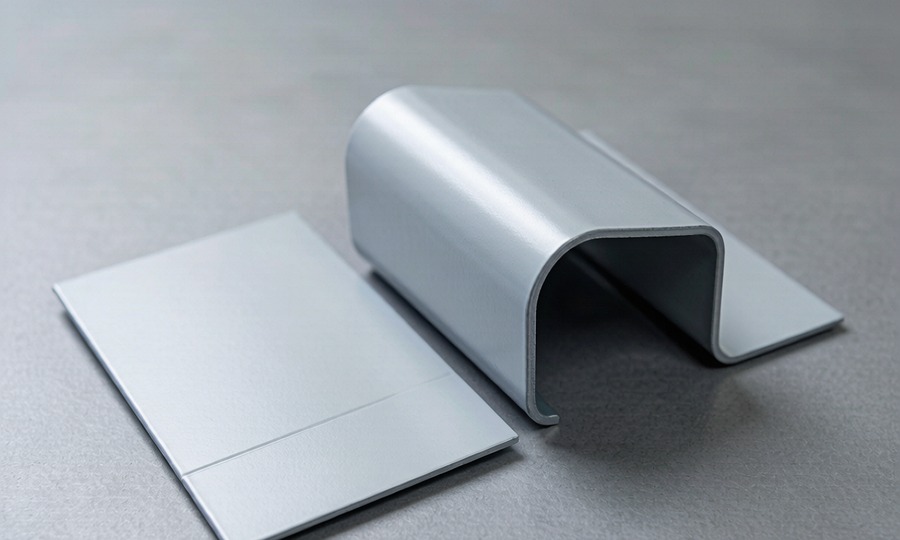
The standard field test is the T-bend, and the name comes from the number of sheet thicknesses in the fold. Fold the panel flat on itself — one thickness at the bend — and that is a 0T. Fold it with one thickness of material trapped inside, and you have 1T. Add another and it is 2T. The lower the number the paint survives without visible cracking, the better the adhesion and the more formable the system.
Reading the result is where people go wrong. A system that reaches 2T cleanly is reasonable for a wall panel profiled through a generous radius. A system that reaches 0T is what you want if the coil goes into a tight lock seam or a deep rib. Buying 2T material for a deep-profiled roof and blaming the supplier when the ribs crack is a specification error, not a quality failure.
There is one important asymmetry in the test: bend the panel with the coating on the outside of the fold. That is the surface being stretched, and it is the surface that fails first. A coating on the inside of a fold is being compressed and will almost never tell you anything.
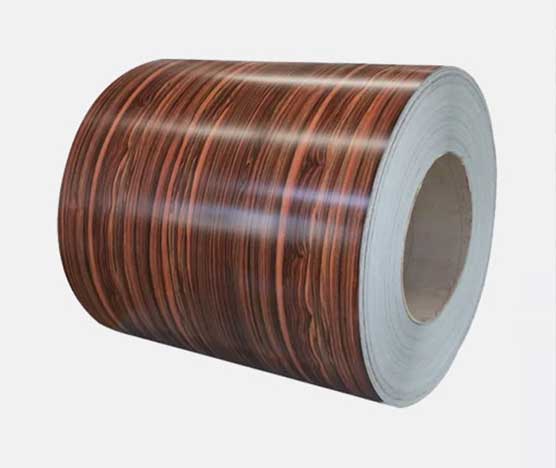
The other common check is the cross-hatch, where a blade cuts a lattice of lines through the film to the substrate, adhesive tape goes on top, and the amount of paint that comes away with the tape is graded against a reference chart. It is quick, it needs almost no equipment, and on a sample of printed color coated coil pulled from a production run it will tell you whether the film is stuck down at all. What it will not tell you is how the material behaves when it is folded, which is the thing that actually costs money.
It is a much weaker test on thin-gauge material, and this matters when you are buying PPGI steel coil in the common 0.3 to 0.6 mm range. On a thin panel, the lattice cutting tool tends to flex the sheet rather than cut cleanly through the film, so the result depends heavily on operator technique. Two people testing the same sample can produce different grades. When cross-hatch results are quoted in a dispute, it is worth asking how many cuts were made, what spacing was used, and whether the same person tested both samples.
For a supplier-side check, bending is more informative on thin sheet. For a lab, the real answer comes from a mandrel bend test at controlled temperature, and from impact testing for the systems that will be handled roughly.
Almost every adhesion failure can be traced to one of four places, and none of them are the paint itself. The film is usually doing exactly what it was designed to do onto the surface it was given.
The first is cleaning. Oils, dust and roller marks left on the strip create a boundary layer between the metal and the conversion coating. The paint then bonds to the oil rather than to the steel, and it releases cleanly at the first bend, leaving bright metal behind. Freshly galvanized steel is not automatically clean steel. Handling, storage and stacking all deposit something on it.
The second is the conversion coating itself. On hot-dip galvanized material that normally means a chromate or chrome-free passivation layer, and its job is to give the paint something to grip. Too thin and there is no key. Too thick and the layer is cohesive-weak in its own right, so the paint pulls away with the passivation attached. Both failure modes look identical on a bent panel, which is why film weight of the pretreatment is worth logging rather than assuming.
The third is the primer, and specifically its flexibility relative to the topcoat. Primer does the adhesion work; topcoat does the weathering work. A primer chosen purely for corrosion resistance can be too rigid for a coil that will be profiled later. Coating choice feeds straight back into adhesion. Zinc and aluminium-zinc surfaces do not take paint the same way, because the aluminium-rich surface on AZ-coated material needs a different pretreatment chemistry to reach a sound bond. A supplier running one pretreatment line for galvanized steel coil and one for AZ-coated stock is usually optimising for whichever of the two sells in greater volume, and the other product inherits that compromise.
The fourth is cure. Under-cured paint is flexible but soft, and it smears rather than cracks at a bend. Over-cured paint is hard and brittle, and it cracks almost immediately. The window between the two is narrower than most people expect, which is why a coating line that has just changed colour or changed speed is worth watching closely for the first coil after the change.
A coil that tested well in the factory can still fail at a customer's press, and the cause is often storage rather than anything in the coating. Damp storage lets white rust form between the wraps of galvanized material, and once that layer exists the paint sits over a powdery interface. Temperature does the same thing more quietly: paint is a polymer, and polymers turn brittle in the cold. A coil that survives a 1T bend in a warm workshop may crack at 2T in an unheated shed in January, which costs nothing to avoid by letting the coil sit overnight at workshop temperature.
It is reasonable to ask for a T-bend value on the coil you buy, and to specify it against the tightest radius the material will actually see, with a margin. If the profile shop forms to 2T, ask for 1T. If the material will only be used flat for walling, paying for a deep-draw system is wasted money. Because T-bend results also shift with thickness, the sensible specification names the gauge alongside the bend requirement.
Zhishang Steel supplies prepainted coil and metallic-coated material in a range of thicknesses, and can supply bend test results alongside the mill documentation when a buyer asks for them. If the forming operation is still being worked out, a drawing or a sample of the profile is more use than a phone call, because everything in this article comes down to one number: the radius the panel will actually be bent through. Send that and the thickness you have in mind, and the rest follows.
Zhishang Steel has always been a pioneer in custom steel and special supplies, and has been recognized for its efforts in enhancing work efficiency and product quality. In addition to ISO9001:2015 certification, we also adhere to strict quality policies and proprietary procedures. If you have any questions, please contact us to provide the best type of product solution for your pre-painted, coil coating metal process, we will closely support after-sales service to ensure that your subsequent problems can be solved in a timely manner, if you have any questions, please send email to info@zhishangsteel.com, we look forward to serving you.

Zhishang Steel, specializing in domestic steel products trade, warehousing, processing and other services. The team has four service teams: Shandong Zhishang Steel Co., LTD., Shandong Zhiyiheng Trading Co., LTD., Tai 'an Zhishang Economic and Trade Co., LTD., Shandong Zhishang Steel Structure Co., LTD. Mainly engaged in steel coil, coated, stee···
▶ Coating Adhesion and the T-Bend: Why Paint Sticks to Some Coils and Not Others
▶ Heat Numbers: How One Stamped Code Follows Your Steel From Furnace to Door
▶ Flatness, Camber and Edge Wave: Reading the Shape of a Coil Before It Costs You
▶ Q235, A36, S235JR, SS400: Four Names for (Almost) the Same Steel
▶ Zinc Coating Weight, Explained: What Z100, Z275 and AZ150 Actually Mean
▶ Weathering Steel: Why the Rust on Purpose Actually Protects
▶ Spangle, Skin-Pass and Passivation: Reading the Surface of a Galvanized Steel Coil
▶ Printed and Patterned Color Coated Coil: How Wood Grain and Brick Patterns Get Onto Steel
▶ Hot Rolled or Cold Rolled: Choosing the Right Route for Carbon Steel Coil
▶ Zinc-Aluminum-Magnesium Coated Steel: What Buyers Need to Know Before Their Next Order
Email:info@zhishangsteel.com
Tel:+86-13964085002
Whatsapp:+86-13964085002
Phone:+86-531-88752665
Message 


Copyright © 2022 Zhishang Steel Co., Ltd All Rights Reserved. XML Map