Zhishang Steel Co., Ltd
Integrity · Pragmatic · Perfect · Fast · Assured - international brand
Phone: +86-531-88752665
Welcome to Zhishang Steel Co., Ltd.
TEL: (Gavin) +86-15665898999 | Email : info@zhishangsteel.com

Zhishang Steel Co., Ltd
Integrity · Pragmatic · Perfect · Fast · Assured - international brand
Phone: +86-531-88752665

Email:info@zhishangsteel.com
Tel:+86-13964085002
Whatsapp:+86-13964085002
Phone:+86-531-88752665
Message
Every so often a buyer asks us a question that sounds almost paranoid: "If one coil out of a hundred fails in service, can you tell me which melt it came from?" The answer is yes, and the reason it is yes comes down to a string of numbers stamped, printed, and tagged onto the steel long before it reached our yard. That string is the heat number, and understanding it changes how you look at every bundle of steel you buy.
A heat, sometimes called a melt or a lot, is one pour from one furnace campaign. When a mill taps a batch of molten steel, everything cast from that batch shares a chemistry: the same carbon, the same manganese, the same residual elements, measured once at the source and valid for every ton that came out of the ladle. The mill assigns that batch a code, the heat number, and it follows the material for the rest of its life.
This is why mechanical properties are quoted per heat and not per coil. Take a run of hot rolled Q235 carbon steel coil: the mill test certificate will list one set of tensile and yield values, and every coil from that heat is covered by them. If a structure built from that heat performs as expected, good. If something goes wrong, the heat number tells the investigation exactly which chemistry was in play, which narrows the problem down fast.
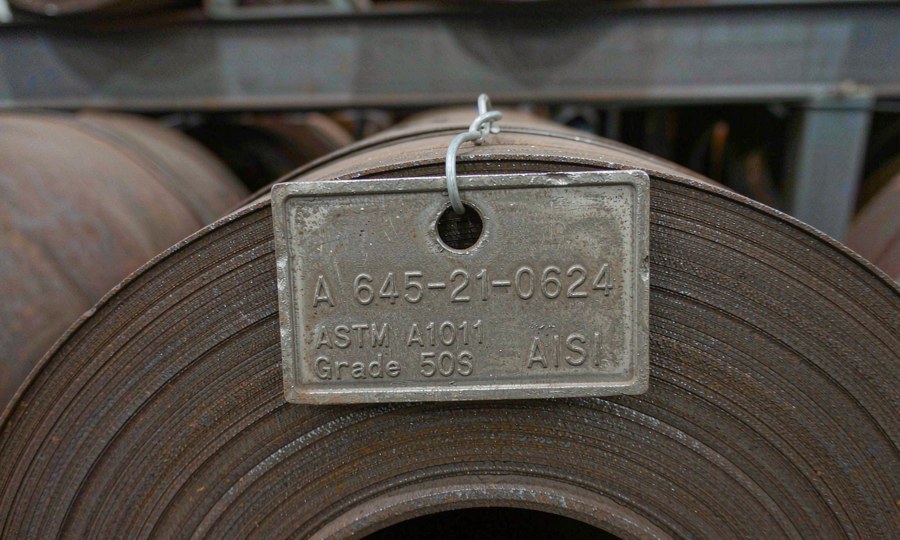
At the mill, the heat number is usually painted or ink-jetted on the coil wrap and stamped on the steel tag wired to the eye of the coil. From there, the discipline is simply about not losing the link. Each time the material is handled, resold, or processed, the paperwork has to carry the same code forward.
In our warehouse, incoming coils are logged by heat number before they are put away. When a customer orders carbon steel plate cut from stock, the packing list references the heat behind each piece, and the mill certificate issued for the shipment carries the same numbers. The goal is a straight line: furnace to ladle to cast to coil to your door, with no broken links in between.
Processing is where traceability gets harder, and where a supplier either has a system or does not. Slit a wide coil into narrow strands and you now have a dozen pieces that all came from one heat. The correct practice is to transfer the identity: every slit coil gets a new tag that carries the parent heat number. The same applies when we level and cut material into sheets. A pallet of galvanized sheet leaving our floor should be traceable to the coils it was cut from, sheet by sheet, through the bundle tags.
Most of the time, traceability is invisible. The steel is fine, the project stands up, nobody ever asks about the heat. But three situations come up regularly enough that we tell every serious buyer about them upfront.
First, third-party inspection. If you hire an agency to verify a shipment, one of the first things they do is match the heat numbers on the physical material against the certificate. A mismatch, or worse, a bundle with no legible marking, stops the inspection on the spot. We have seen shipments held at port for weeks over marking that should have taken an hour to fix at the warehouse.
Second, projects with code compliance. Structural work, pressure applications, and anything with an auditor attached will ask for material traceability records. Alloy products make this even stricter; for 316L stainless steel coil used in chemical service, the heat number is what proves the low-carbon chemistry the specification demands. Without it, the certificate is just a nice-looking piece of paper.
Third, the rare but real failure case. When a weld cracks or a part corrodes early, the first question from any competent investigation is the heat number of the parent material. If the answer exists, the root cause analysis takes days. If it does not, everything made from that same stock becomes suspect, and the cost of not knowing multiplies.
Traceability survives only if both sides handle it. When material arrives, check that bundle tags match the packing list before unwrapping anything. Photograph the tags and keep them with the certificate file. If you are cutting or re-selling the material downstream, carry the heat number onto your own paperwork. It costs minutes and it preserves the entire chain.
And when you place an order, tell us if the heat number needs to appear on your documents in a particular format. Some of our customers feed the numbers straight into their own ERP or quality system, and a small formatting request at order time avoids re-issuing paperwork later.
A coil of steel is one of the few industrial products that can still be traced back to a specific pour of molten metal, decades of practice behind the habit. The heat number is not decoration on a tag. It is the thread that connects your order to the furnace, and any supplier who treats it casually is telling you something about how they run everything else.
Zhishang Steel has always been a pioneer in custom steel and special supplies, and has been recognized for its efforts in enhancing work efficiency and product quality. In addition to ISO9001:2015 certification, we also adhere to strict quality policies and proprietary procedures. If you have any questions, please contact us to provide the best type of product solution for your pre-painted, coil coating metal process, we will closely support after-sales service to ensure that your subsequent problems can be solved in a timely manner, if you have any questions, please send email to info@zhishangsteel.com, we look forward to serving you.

Zhishang Steel, specializing in domestic steel products trade, warehousing, processing and other services. The team has four service teams: Shandong Zhishang Steel Co., LTD., Shandong Zhiyiheng Trading Co., LTD., Tai 'an Zhishang Economic and Trade Co., LTD., Shandong Zhishang Steel Structure Co., LTD. Mainly engaged in steel coil, coated, stee···
▶ Heat Numbers: How One Stamped Code Follows Your Steel From Furnace to Door
▶ Flatness, Camber and Edge Wave: Reading the Shape of a Coil Before It Costs You
▶ Q235, A36, S235JR, SS400: Four Names for (Almost) the Same Steel
▶ Zinc Coating Weight, Explained: What Z100, Z275 and AZ150 Actually Mean
▶ Weathering Steel: Why the Rust on Purpose Actually Protects
▶ Spangle, Skin-Pass and Passivation: Reading the Surface of a Galvanized Steel Coil
▶ Printed and Patterned Color Coated Coil: How Wood Grain and Brick Patterns Get Onto Steel
▶ Hot Rolled or Cold Rolled: Choosing the Right Route for Carbon Steel Coil
▶ Zinc-Aluminum-Magnesium Coated Steel: What Buyers Need to Know Before Their Next Order
Email:info@zhishangsteel.com
Tel:+86-13964085002
Whatsapp:+86-13964085002
Phone:+86-531-88752665
Message 



Copyright © 2022 Zhishang Steel Co., Ltd All Rights Reserved. XML Map
