Zhishang Steel Co., Ltd
Integrity · Pragmatic · Perfect · Fast · Assured - international brand
Phone: +86-531-88752665
Welcome to Zhishang Steel Co., Ltd.
TEL: (Gavin) +86-15665898999 | Email : info@zhishangsteel.com

Zhishang Steel Co., Ltd
Integrity · Pragmatic · Perfect · Fast · Assured - international brand
Phone: +86-531-88752665

Email:info@zhishangsteel.com
Tel:+86-13964085002
Whatsapp:+86-13964085002
Phone:+86-531-88752665
Message
Most enquiries we see spell out thickness, width, zinc coating, grade and quantity, then stop. Shape almost never gets mentioned, which is a shame, because shape is where a surprising number of problems start. A coil can be the right grade, the right thickness and the right coating, and still be a headache on your line if it wants to curl, wave or twist the moment it leaves the uncoiler.
Shape defects aren't mysterious. They have names, causes and limits written into every major standard. Here's a plain-language version of what to look for.
Camber is the easiest to spot: the strip curves like a very long banana when you unroll it on the floor. Technically it's measured as the deviation of one edge from a straight line over a set length — put a string along one edge and measure the biggest gap. It matters most when the material is being fed into a shear line or a forming machine that expects the strip to arrive straight.
Edge wave is exactly what it sounds like — the edges ripple while the middle stays flat, so the sheet looks like it has ruffled frills along both sides. The opposite problem, centre buckle, shows the middle loose while the edges stay tight. Both come from the same root cause: some parts of the strip are slightly longer than others, and the shorter parts hold the longer ones hostage.
There's also coil set — the tendency of the leading edge to curl in the direction the coil was wound — and crossbow, a lengthwise bow across the width. These two are usually small and easy to level out, but on thin sheet they can turn into oil canning once panels are roll-formed, which is one of the classic complaints in roofing.
Strip is rolled under enormous pressure, and any imbalance shows up as internal stress. A little more reduction on one side of the roll gap and that side comes out longer. Uneven cooling across the width does the same thing later. Slitting wide coils into narrow ones is another classic trigger: you're cutting through the stress balance, and each narrow strand is free to express whatever was bottled up inside it. That's why a multi-strand slitting job often needs a shape discussion of its own.
Coiling tension hides a lot of this. Pull the strip tight on the mandrel and everything looks flat; let the tension go on your uncoiler and the hidden stresses show themselves. This is why two coils of the same grade from different mills can behave differently on the same line even when the certificates read identically.
No coil is perfectly flat, and the standards don't pretend otherwise. What they give you is a tolerance band. EN 10051 for continuously rolled strip and ASTM A568 for carbon steel sheet both publish tables of allowable deviations — for thickness, camber and flatness — based on width and thickness. The general pattern is simple: thinner and narrower material gets a tighter allowance in absolute terms, and the numbers are written as maximum deviations over a defined length, not as a promise of geometric perfection.
The practical takeaway is that "flat" in a contract means "within the table". If your process needs better than that, say so at enquiry stage. Better flatness is a real product with a real cost — it usually means extra passes through a leveler or a temper mill, and on demanding work, a stretcher leveler that pulls the strip slightly past its yield point to even out the internal stresses.
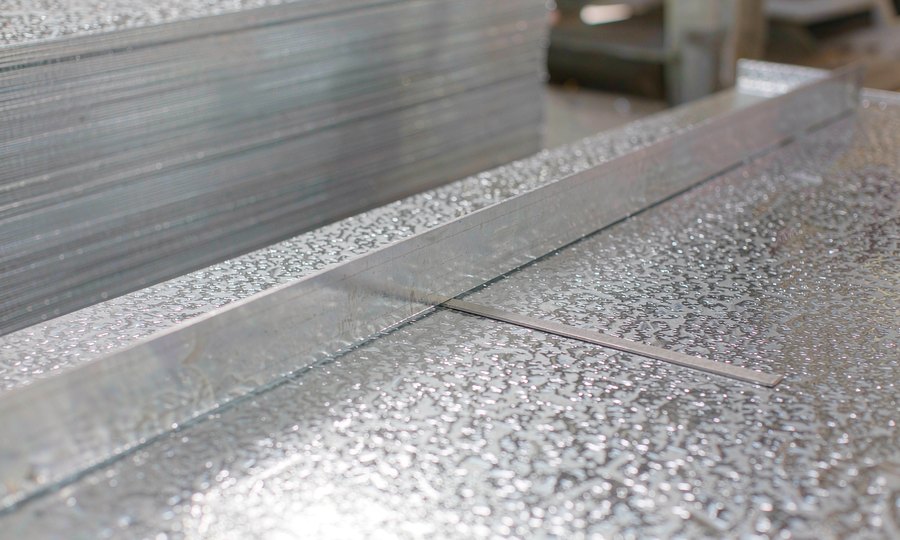
Flat sheet from the mill can still misbehave after processing. Cut a wavy sheet into blanks and the wave becomes your problem at the press. Laser cutting is particularly unforgiving — a sheet that isn't flat hunts up and down under the head, and the shifting focus shows up as a ragged cut. On architectural work, slight shape imperfections in painted or galvanized steel sheet turn into visible oil canning on a finished wall, which the building owner will notice even if the material is fully within spec.
Stainless compounds the issue because it work-hardens and springs back more than carbon steel. Levelling a 304 stainless steel coil for a polishing line takes more attention than the same job on a hot rolled carbon steel coil, and it's worth asking a supplier how they handle it rather than assuming one setting fits all.
Three habits cover most of it. First, put the shape requirement in writing with the rest of the spec — even a single line about flatness class or camber limits gives both sides something to test against. Second, think about what happens to the material after it leaves the mill and choose accordingly; a carbon steel plate destined for flame cutting has different shape needs than a panel that gets roll-formed for a façade. Third, when material arrives, check shape the same day, on the floor, before processing — internal stresses relax and move with time and temperature, and a claim is much easier to support with photos taken before the bundles were opened.
None of this is complicated. It's just the part of the spec that everyone assumes and nobody reads, until the day it matters.
Zhishang Steel has always been a pioneer in custom steel and special supplies, and has been recognized for its efforts in enhancing work efficiency and product quality. In addition to ISO9001:2015 certification, we also adhere to strict quality policies and proprietary procedures. If you have any questions, please contact us to provide the best type of product solution for your pre-painted, coil coating metal process, we will closely support after-sales service to ensure that your subsequent problems can be solved in a timely manner, if you have any questions, please send email to info@zhishangsteel.com, we look forward to serving you.

Zhishang Steel, specializing in domestic steel products trade, warehousing, processing and other services. The team has four service teams: Shandong Zhishang Steel Co., LTD., Shandong Zhiyiheng Trading Co., LTD., Tai 'an Zhishang Economic and Trade Co., LTD., Shandong Zhishang Steel Structure Co., LTD. Mainly engaged in steel coil, coated, stee···
▶ Flatness, Camber and Edge Wave: Reading the Shape of a Coil Before It Costs You
▶ Q235, A36, S235JR, SS400: Four Names for (Almost) the Same Steel
▶ Zinc Coating Weight, Explained: What Z100, Z275 and AZ150 Actually Mean
▶ Weathering Steel: Why the Rust on Purpose Actually Protects
▶ Spangle, Skin-Pass and Passivation: Reading the Surface of a Galvanized Steel Coil
▶ Printed and Patterned Color Coated Coil: How Wood Grain and Brick Patterns Get Onto Steel
▶ Hot Rolled or Cold Rolled: Choosing the Right Route for Carbon Steel Coil
▶ Zinc-Aluminum-Magnesium Coated Steel: What Buyers Need to Know Before Their Next Order
Email:info@zhishangsteel.com
Tel:+86-13964085002
Whatsapp:+86-13964085002
Phone:+86-531-88752665
Message 



Copyright © 2022 Zhishang Steel Co., Ltd All Rights Reserved. XML Map
