Zhishang Steel Co., Ltd
Integrity · Pragmatic · Perfect · Fast · Assured - international brand
Phone: +86-531-88752665
Welcome to Zhishang Steel Co., Ltd.
TEL: (Gavin) +86-15665898999 | Email : info@zhishangsteel.com

Zhishang Steel Co., Ltd
Integrity · Pragmatic · Perfect · Fast · Assured - international brand
Phone: +86-531-88752665

Email:info@zhishangsteel.com
Tel:+86-13964085002
Whatsapp:+86-13964085002
Phone:+86-531-88752665
Message
A buyer in Lagos asks for A36. His supplier in Shanghai quotes Q235. The mill in Europe would call it S235JR, and a Japanese trader would say SS400. All four people are talking about a plain carbon structural steel with a minimum yield strength somewhere around 235–250 MPa, and yet nobody is wrong. Structural steel grades aren't universal — each region's standards body wrote its own book decades ago, and the names stuck. If you buy steel across borders, you eventually have to translate between these books. This is a practical crosswalk, with the caveats that actually matter when you're deciding whether a substitution is safe.
Start with the numbers everyone quotes. Q235, the workhorse of China's GB standard, gets its name from its minimum yield strength: 235 MPa. A36, from ASTM in the United States, specifies a minimum yield of 250 MPa — 36 ksi, hence the name — with tensile strength roughly 400–550 MPa. S235JR comes from the European EN standard and again points at a 235 MPa yield; the "JR" suffix means it passed a Charpy impact test at room temperature (20°C). SS400 under Japan's JIS G3101 has a minimum tensile of 400 MPa, with yield requirements that vary by thickness, typically around 245 MPa for thinner sections.
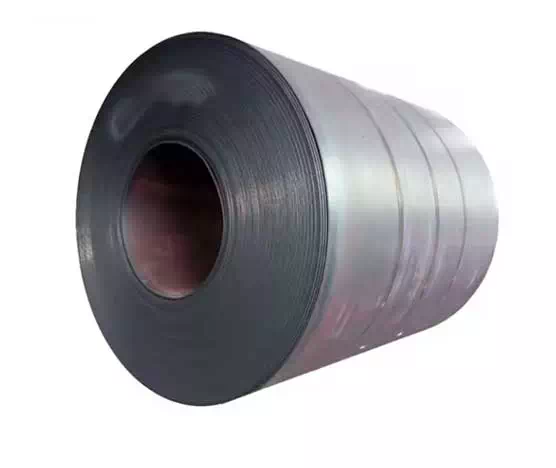
On paper, then, the mechanical spread between them is small — a difference of 10–15 MPa in yield is noise for most structures. The carbon content is also broadly similar: these are low-carbon steels, generally kept under about 0.22–0.25% carbon for weldability. That's why the crosswalk exists at all. A mill producing hot rolled Q235 carbon steel coil can, with the right chemistry and testing, supply material that many buyers would happily accept where A36 or S235 is specified — provided the paperwork backs it up.
Here's where the crosswalk needs a health warning. The grades are similar; they are not identical, and the differences show up in three places.
First, impact testing. European S235JR requires a Charpy V-notch test at room temperature, and its siblings go further — S235J0 at 0°C, S235J2 at -20°C. Q235 splits into A, B, C, D quality levels with progressively stricter impact requirements too. A36 has its own Charpy provisions only when specifically ordered. So two coils with the same yield strength can behave very differently in cold weather. If your project lives in a climate with real winters, the grade letter matters more than the number in the name.
Second, what's guaranteed versus what's typical. JIS SS400 historically didn't guarantee yield strength the way Western standards do; it was tensile-driven. That's fine for many applications, but an engineer designing to a yield-based code wants a test certificate showing yield, not a datasheet promise. Always ask for the mill test certificate (EN 10204 3.1 or equivalent) and read the actual measured values, not the grade name.
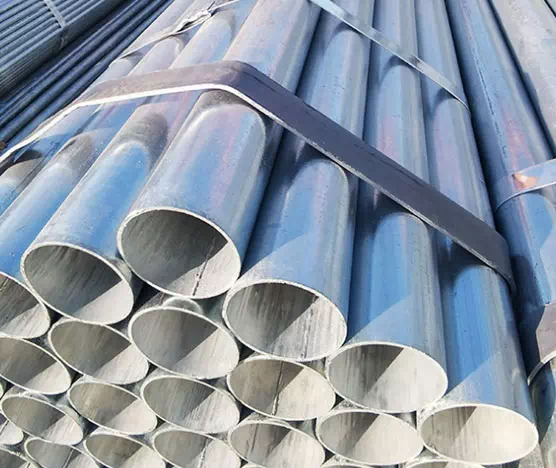
Third, thickness and shape effects. Yield requirements in most standards drop as sections get thicker, because heavy plate cools differently than thin strip. The "same grade" in a 3 mm sheet and a 40 mm plate is not the same test result. This is one reason we'd rather quote from the exact product page — for instance, Q235 galvanized round steel pipe or a Q235B galvanized pipe — where the standard and quality level for that specific product are stated, instead of guessing from a general equivalence table.
One trap worth flagging separately: structural grades and coating designations use different naming systems, and buyers mix them up constantly. DX51D is an EN 10346 name for the substrate of a galvanized product — it tells you about formability, not structure. SGCC is the JIS name for a similar galvanized sheet, and G90 or Z275 refer to coating weight, not strength. A coil described as DX51D Z80 galvanized steel coil is speaking EN-plus-coating-weight language even when it ships under JIS packaging. When your drawing says one thing and the mill certificate says another, check whether the mismatch is a real problem or just two naming systems describing the same coil.
So what should a buyer do when the specified grade isn't what the market offers? Three steps, in order. Get the mill test certificate for the offered grade and compare it against the spec — actual chemistry and mechanicals, side by side. Check the design code: if the project was engineered to ASTM or EN rules, some engineers will accept a "foreign" grade with supporting certs, others won't, and that's their call to make, not the trader's. And put the agreed grade on the proforma invoice and the MTC, not just in an email thread. In our experience most substitution disputes don't come from bad steel — they come from two parties using the same word for slightly different things. Four names, one steel, and a paper trail that says exactly which one you're getting: that's the whole game.
Zhishang Steel has always been a pioneer in custom steel and special supplies, and has been recognized for its efforts in enhancing work efficiency and product quality. In addition to ISO9001:2015 certification, we also adhere to strict quality policies and proprietary procedures. If you have any questions, please contact us to provide the best type of product solution for your pre-painted, coil coating metal process, we will closely support after-sales service to ensure that your subsequent problems can be solved in a timely manner, if you have any questions, please send email to info@zhishangsteel.com, we look forward to serving you.

Zhishang Steel, specializing in domestic steel products trade, warehousing, processing and other services. The team has four service teams: Shandong Zhishang Steel Co., LTD., Shandong Zhiyiheng Trading Co., LTD., Tai 'an Zhishang Economic and Trade Co., LTD., Shandong Zhishang Steel Structure Co., LTD. Mainly engaged in steel coil, coated, stee···
▶ Q235, A36, S235JR, SS400: Four Names for (Almost) the Same Steel
▶ Zinc Coating Weight, Explained: What Z100, Z275 and AZ150 Actually Mean
▶ Weathering Steel: Why the Rust on Purpose Actually Protects
▶ Spangle, Skin-Pass and Passivation: Reading the Surface of a Galvanized Steel Coil
▶ Printed and Patterned Color Coated Coil: How Wood Grain and Brick Patterns Get Onto Steel
▶ Hot Rolled or Cold Rolled: Choosing the Right Route for Carbon Steel Coil
▶ Zinc-Aluminum-Magnesium Coated Steel: What Buyers Need to Know Before Their Next Order
▶ Introduction to Stainless Steel Angle Steel Structure and Identification Methods
Email:info@zhishangsteel.com
Tel:+86-13964085002
Whatsapp:+86-13964085002
Phone:+86-531-88752665
Message 



Copyright © 2022 Zhishang Steel Co., Ltd All Rights Reserved. XML Map