Zhishang Steel Co., Ltd
Integrity · Pragmatic · Perfect · Fast · Assured - international brand
Phone: +86-531-88752665
Welcome to Zhishang Steel Co., Ltd.
TEL: (Gavin) +86-15665898999 | Email : info@zhishangsteel.com

Zhishang Steel Co., Ltd
Integrity · Pragmatic · Perfect · Fast · Assured - international brand
Phone: +86-531-88752665

Email:info@zhishangsteel.com
Tel:+86-13964085002
Whatsapp:+86-13964085002
Phone:+86-531-88752665
Message
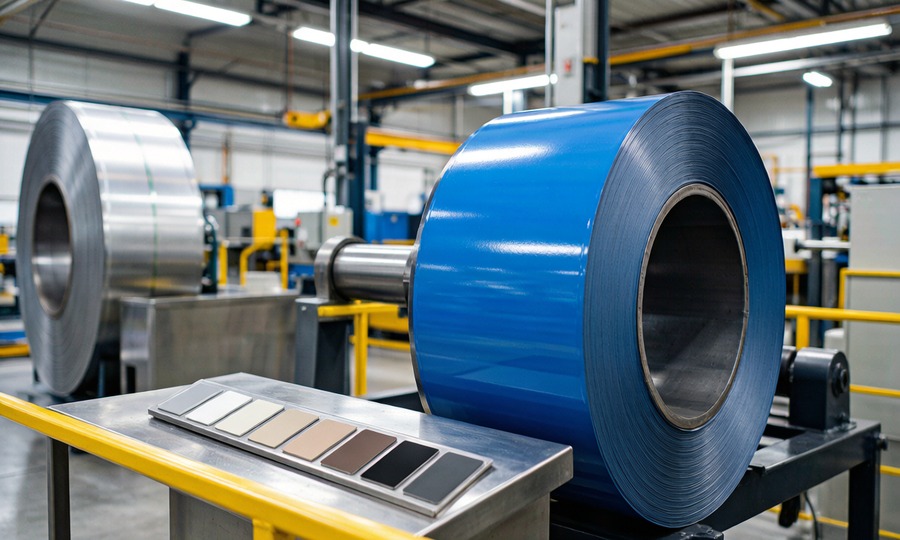
A colour change on a coating line never happens at a convenient moment. The order book says the next coil is RAL 5010 sea blue, the one running now is RAL 9002 white grey, and somewhere in between there is a window of about forty minutes in which everything either goes smoothly or the next two hundred metres turn into scrap.
We run a fair number of short runs, which means we change colours more often than a mill working one shade for a fortnight. After enough of these we stopped treating the changeover as lost time and started treating it as part of the job. Here is what actually happens, and what we have learned to watch.
Old paint and new paint do not blend into each other. They sit on top of one another, and the join is only as strong as the weakest interface underneath. If a film of sea blue is left in the roller nip, the white grey goes over it and looks acceptable under factory lighting. Two weeks later, on a roof in the sun, that strip shows up as a slightly darker band. Nobody accepts a coil with a band in the middle of it, and by then the coil is usually already on the water.
Solvent flushing is the standard method and it works, provided the flushing is done against pressure and volume rather than by feel. The moment a paint line goes from the viscometer to an operator's judgement, film weight starts to wander. We flush twice on a dark-to-light change, once on light-to-dark, and both times the spent solvent goes to a closed drum rather than down a drain.
Everyone remembers to clean the paint pan. Fewer people think about the pickup roller, the applicator roller and the small transfer rollers behind them. Those absorb whatever was running last, and they release it slowly for the next hour. A roller that looks clean can still be carrying enough pigment to shift the shade of the first fifty metres by a visible margin.
Roller hardness is worth checking at the same time. A roller that has gone soft from solvent exposure transfers unevenly, and uneven transfer reads on the finished coil as a faint barring down the length. On a plain flat panel in a warehouse, nobody notices. On a galvanized steel coil that will be slit into narrow strips and folded into a wall cladding profile, the barring lines up along the fold and stays there for the life of the building.
The temptation is to get back to line speed as fast as possible. We do the opposite for the first coil after a change. Line speed down, oven temperatures held steady, film weight checked at three points along the strip rather than the usual one. If the first coil is right, the third and fourth will be right. If the first coil is marginal, the operator will spend the rest of the shift adjusting and the whole run drifts.
The checks we take on that first coil are not complicated. Coating thickness with an electromagnetic gauge on both faces. A visual pull against the colour standard under a daylight lamp, not the sodium lights over the line. A strip of tape pressed on and pulled off to confirm nothing is lifting. And a T-bend on the corner, because paint that has not cured properly will show fine cracking at the bend before it shows anywhere else.
Peak metal temperature is the figure most people quote when they talk about curing, and it is the easiest to measure with a temperature strip stuck to the strip. It is not the whole story. Bake time and peak temperature work together, and a line running above its rated speed can hit the right peak with only half the dwell time. The paint at the surface is set; the layer against the metal has not cross-linked. That coil will pass a fingernail test and fail on site six months later when it is roll-formed through a tight radius.
Winter complicates this. A cold coil entering the oven pulls heat out of the first zone, which drags on the whole profile unless the oven setpoints are adjusted. We raise the first-zone setpoint on a cold morning instead of speeding up the line, which is the opposite of what production pressure usually suggests.
Every changeover gets a sheet: previous colour, new colour, solvent volume used, first-coil film weight readings, oven temperatures at each zone, line speed, and a note on whether any strip was downgraded. That sheet is not for the customer to read. It is there so that when a shade query arrives eight months later, we are not guessing about what happened on a Tuesday afternoon.
It also makes the next changeover faster. After a few months of sheets, we know which colour pairs give us trouble. Red to white is slower than white to grey. Dark blues carry further in the rollers than pale greens. A supplier's darker shades sometimes need an extra pass because the pigment loading is heavier. That knowledge is worth more than any one-off time saving.
There is an argument in this trade that a coating line should only do long runs, and that anything under a few tonnes should be refused or pushed to a job shop. We do not follow it. Plenty of buyers need six tonnes of PPGI steel coil in a shade that matches a fascia they installed ten years ago, and a mill that can produce that is more useful than one that can only produce sea blue.
What a short run demands is discipline, not heroics. Flush properly. Watch the rollers. Go slow on the first coil. Take the readings. Everything after that is arithmetic.
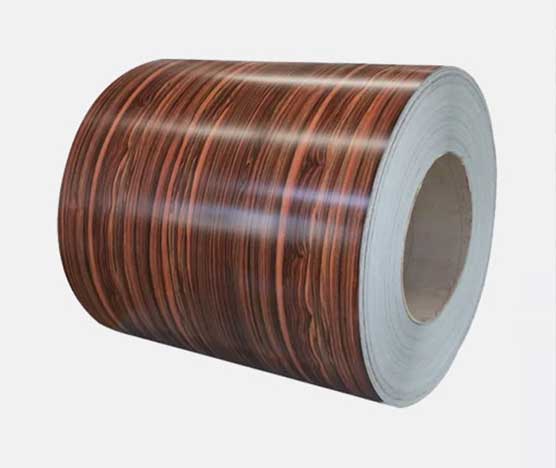
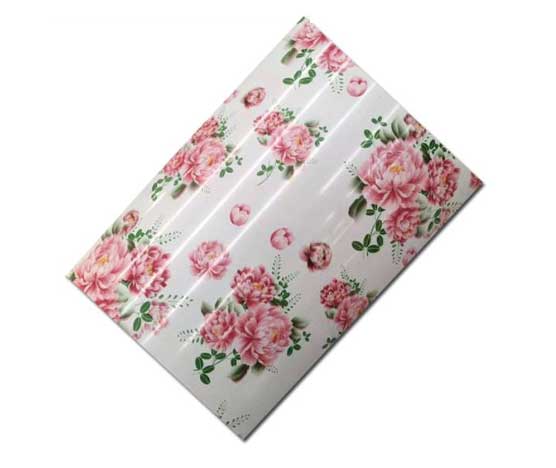
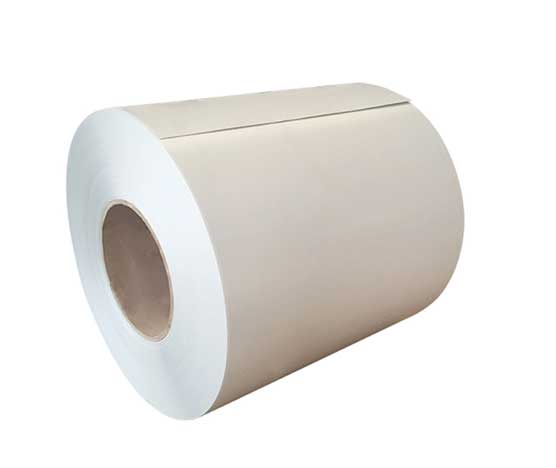
If you want to know how a colour change actually reads on a finished panel, the honest test is a piece of the real coil. We would rather send you three small samples in the shade you are considering than have you commit to twenty tonnes and find out on site what the numbers meant. Send us the colour reference, the substrate and the thickness you have in mind — printed color coated coil stock and plain colour ranges both come out of the same line, and the changeover considerations are broadly the same either way.
One last thing worth saying. A coil does not have to be perfect to be good. It has to be consistent. Twenty tonnes that match each other and match the sample are worth more than twenty tonnes made at a higher standard with visible variation inside them. That is what the changeover discipline is really protecting.
Zhishang Steel has always been a pioneer in custom steel and special supplies, and has been recognized for its efforts in enhancing work efficiency and product quality. In addition to ISO9001:2015 certification, we also adhere to strict quality policies and proprietary procedures. If you have any questions, please contact us to provide the best type of product solution for your pre-painted, coil coating metal process, we will closely support after-sales service to ensure that your subsequent problems can be solved in a timely manner, if you have any questions, please send email to info@zhishangsteel.com, we look forward to serving you.

Zhishang Steel, specializing in domestic steel products trade, warehousing, processing and other services. The team has four service teams: Shandong Zhishang Steel Co., LTD., Shandong Zhiyiheng Trading Co., LTD., Tai 'an Zhishang Economic and Trade Co., LTD., Shandong Zhishang Steel Structure Co., LTD. Mainly engaged in steel coil, coated, stee···
▶ Painting Over Paint: How We Change Colour on a Coating Line Without Ruining a Coil
▶ Sample Requests: What Happens After You Ask Us for a Piece of Steel
▶ When a Shipment Isn't Right: How We Work Through a Steel Claim
▶ Packing Steel for the Ocean: What Actually Happens Before Your Coil Enters the Container
▶ Your Coil Doesn't Have to Be 1250mm: Notes From Our Slitting and Cut-to-Length Line
▶ Mill Test Certificates: What's Actually on the Paperwork We Ship With Your Steel
▶ Stock or Mill Run? How We Decide What Sits on Our Floor
▶ What We Ask Before We Quote: The Details That Decide Your Steel Price
▶ One Container, Several Products: How We Organize a Mixed Steel Export Order
Email:info@zhishangsteel.com
Tel:+86-13964085002
Whatsapp:+86-13964085002
Phone:+86-531-88752665
Message 



Copyright © 2022 Zhishang Steel Co., Ltd All Rights Reserved. XML Map