Zhishang Steel Co., Ltd
Integrity · Pragmatic · Perfect · Fast · Assured - international brand
Phone: +86-531-88752665
Welcome to Zhishang Steel Co., Ltd.
TEL: (Gavin) +86-15665898999 | Email : info@zhishangsteel.com

Zhishang Steel Co., Ltd
Integrity · Pragmatic · Perfect · Fast · Assured - international brand
Phone: +86-531-88752665

Email:info@zhishangsteel.com
Tel:+86-13964085002
Whatsapp:+86-13964085002
Phone:+86-531-88752665
Message
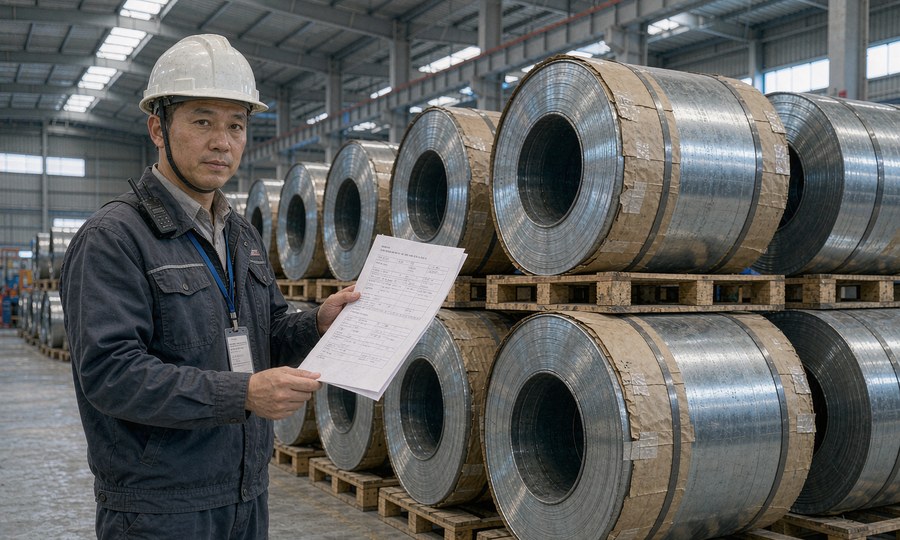
Every shipment that leaves our yard goes out with a mill test certificate stapled into the shipping documents. Some customers read it line by line. Most, if we are honest, scan it, drop it into a folder, and never open it again unless a problem shows up. We get that — the paperwork is not why anyone buys steel. But having spent years answering questions after things went sideways, we have learned that the MTC is the single most useful piece of paper in the whole export file, and it is worth five minutes of your time.
So this is a plain-language walkthrough of what is on the certificate we send with every bundle of galvanized steel coil, and how to use it if you ever need to.
There are a few certificate levels floating around the industry. A 2.2 is basically a statement of compliance with test results that are not tied to your specific material. A 3.1, issued by the manufacturer's own inspection department, states that the results come from the actual heat and coil you are buying. A 3.2 adds a third-party inspector's signature on top. For most construction and fabrication work, a 3.1 is what buyers ask for, and that is what we issue by default.
On the sheet itself you will find the heat number, the chemical composition, the mechanical test results, the applicable standard, and the dimensions. That is it. No marketing, no logos worth looking at. The value is in how those five items connect to the material sitting in your yard.
The heat number is the link between the paper and the metal. Steel is produced in heats — one melt of the furnace — and every coil or plate rolled from that heat carries the same number on its tag. When you receive material, check that the heat numbers on the bundle tags match the ones on the certificate. It takes a minute with a marker pen and it closes the biggest loophole in the supply chain: material that gets swapped, mixed, or relabelled somewhere between the mill and your gate.
We have had customers photograph every tag before unwrapping a container and comparing against the cert before cutting anything. That might sound paranoid. It is not. It is just good practice, and anyone supplying you proper material will not be offended by it.
The composition table looks dense but you only need a few rows. Carbon and manganese for a typical forming grade tell you how the material will bend and weld. Sulphur and phosphorus are the two you want low — high values show up later as cracking during bending or porosity in welds. For a carbon steel plate, you would expect carbon under roughly 0.20% and combined sulphur and phosphorus well below 0.1%. If a cert for material sold as deep-drawing quality shows carbon near the top of the range, ask questions before you commit it to a stamping line.
For coated material the logic is similar but the numbers move to the coating. A cert for a cert for a PGI or a PPGI steel coil will reference the substrate chemistry plus the coating weight, for example Z275 meaning 275 grams per square metre total on both surfaces. Coating weight is where shortcuts happen in this industry, so it is one of the first things we tell customers to check against what they ordered.
Yield strength, tensile strength, and elongation come from tensile tests on samples cut from the coil or plate. Two honest caveats here. First, test samples are cut from specific positions, and material varies slightly across a coil — the cert gives you a representative picture, not a promise for every square centimetre. Second, elongation numbers only mean something when you know the gauge length used. If you are comparing certs from two suppliers and one shows dramatically better elongation, check whether the test methods actually match before concluding one mill is better.
A few situations justify a call rather than an email. If the heat numbers do not match the tags, stop and ask. If the cert lists a different standard than your purchase order, ask. If the mechanical values sit exactly on the minimum limit for every single property, that is legal but unusual enough to warrant a conversation. And if you bought against a spec that matters — structural work, pressure applications, anything with a certification chain behind it — you are entitled to ask for sample retention or third-party retesting. We arrange that regularly and a serious supplier never resists it.
One more thing worth saying. Certificates occasionally get lost, or arrive with an obvious typo in the customer name, and buyers assume re-issuing one is a hassle. It is not. Because everything ties back to the heat number, a corrected or duplicate 3.1 can be pulled up from mill records years later. We have re-issued certs for material shipped three years earlier, and any mill with proper records can do the same.
The way we see it, the MTC is not administrative overhead. It is the cheapest insurance in the transaction — a one-page, mill-signed statement that what you paid for is what showed up. Next time a container of carbon steel coil or stainless steel sheet arrives, spend five minutes with the paperwork. If anything on it does not add up, send us a photo of the tag and the cert line in question, and we will sort it out from our end.
Zhishang Steel has always been a pioneer in custom steel and special supplies, and has been recognized for its efforts in enhancing work efficiency and product quality. In addition to ISO9001:2015 certification, we also adhere to strict quality policies and proprietary procedures. If you have any questions, please contact us to provide the best type of product solution for your pre-painted, coil coating metal process, we will closely support after-sales service to ensure that your subsequent problems can be solved in a timely manner, if you have any questions, please send email to info@zhishangsteel.com, we look forward to serving you.

Zhishang Steel, specializing in domestic steel products trade, warehousing, processing and other services. The team has four service teams: Shandong Zhishang Steel Co., LTD., Shandong Zhiyiheng Trading Co., LTD., Tai 'an Zhishang Economic and Trade Co., LTD., Shandong Zhishang Steel Structure Co., LTD. Mainly engaged in steel coil, coated, stee···
▶ Mill Test Certificates: What's Actually on the Paperwork We Ship With Your Steel
▶ Stock or Mill Run? How We Decide What Sits on Our Floor
▶ What We Ask Before We Quote: The Details That Decide Your Steel Price
▶ One Container, Several Products: How We Organize a Mixed Steel Export Order
▶ How We Check Every Coil Before It Leaves the Plant
▶ The King of Colored Elastomers - High-performance Copper-based Alloy Beryllium Bronze
▶ Overview of Steel Structures
▶ The application scenarios of floor deck slabs are extensive
▶ Comprehensive Analysis of ASTM 301 / JIS SUS301 Stainless Steel
Email:info@zhishangsteel.com
Tel:+86-13964085002
Whatsapp:+86-13964085002
Phone:+86-531-88752665
Message 



Copyright © 2022 Zhishang Steel Co., Ltd All Rights Reserved. XML Map
